Thursday, 7 September 2023

How to Start a Profitable bakery business in Nigeria

 How To Start A Bread Bakery Business In NigeriaBread Bakery Business production
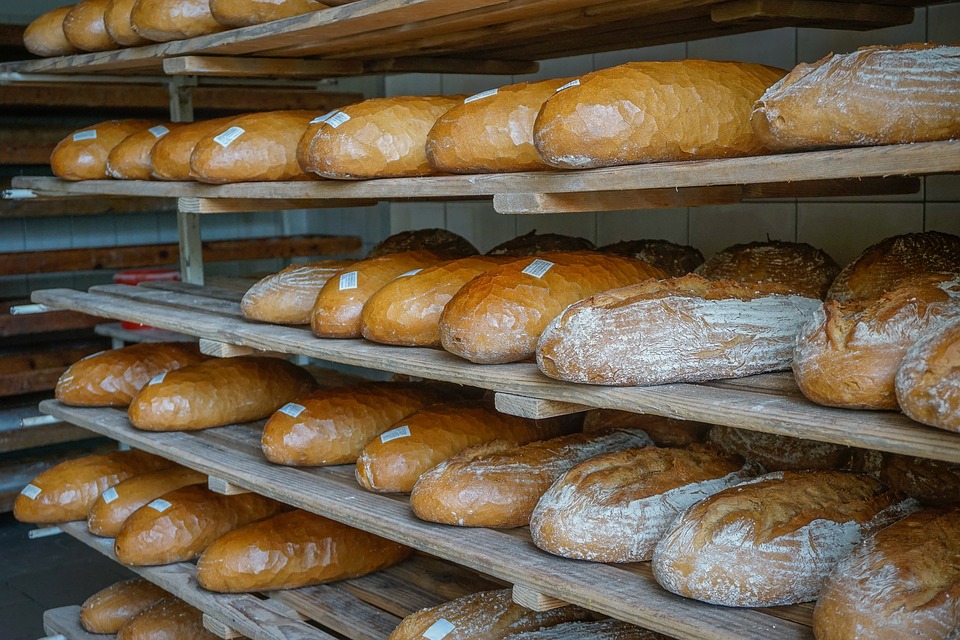
Bread is the third most popular food staple in most parts of the world. It is widely consumed across the continents by almost all citizens, ethnics and religions groups. Everyone likes the smell and taste of bread, especially when it is freshly baked. It is one of the quickest and cheapest food to get your hands on in time of hunger. With these in mind, we can safely conclude that starting a bread bakery business anywhere in the world is going to be a viable business.

Like I have always said, the best product to deal with is the product that is in high demand in the market and bread happens to be one of such product. About 10 million loaves of bread are consumed in Lagos everyday while the Americans eats 53 pound of loaves every year. Each French person is believed to eat a whooping average of 3 loaves of bread daily. Over all, 36 billion loaves of bread can only feed the entire world for just two weeks.

Therefore, if you are thinking of a business to invest into right now, I want you to consider starting your own bread bakery business. I once supplied sliced bread in Lagos and I know the profit we make back then. The same thing goes to bread makers, they make very impressive profit in the business, better than the average business in the country.

Bread bakery is not much difficult to setup once you have the financial capacity and able to meet the requirements and regulation by the authority. In this article, we want to explain in simple language how to start bread bakery business anywhere in the country but before we go ahead, let us first look at the profit potential as well as the potential risks in the bread bakery business.

The Profit In Bread Bakery Business

It cost about N80.00 ($0.50) to produce standard sliced bread in Nigeria. The bakers sells at N130 to suppliers and make N50 per bread. The suppliers sells to retailers at the cost of N170 and make N50 gain per loaf of bread they supply while the retailers sells between N200 to N220 to the final consumers. So, N50 is the average gain made by each of the parties involved at every stage from production to the final supply.

A typical standard bakery with good supply network produce and sell 50,000 loaves of sliced bread weekly on average. Now multiply 50 by 50,000 and what you get is the profit for the weekly production and supply – N2,500,000.

Since the cost of production have been taken care of by the N80. You just need to subtract the running costs to get your final profit. Lets say you spend the whole N500,000 for the running cost

1. Cost of fueling your diesel generator for the week = N50,000

2. Cost of fueling and maintaining the supply vehicle = N100,000

3. Cost of labor and staffs welfare during the week = N100,000

4. Damages and other miscellaneous expenses = N50,000

When you subtract all these from the N2.5 million, you will have N2.2 million left as your take home for the week. Can you now see why bread bakery business is considered one of the most profitable business in it’s category?

Risks Involves In Bread Bakery Business

Like most business on earth, there are some of the risks involved which you’d do well to be aware of. And being aware of these risks will help you plan properly on how to completely avoid or minimize them. It will also help you to properly plan your income and expenditure. Below are some of the popular risks in the business.
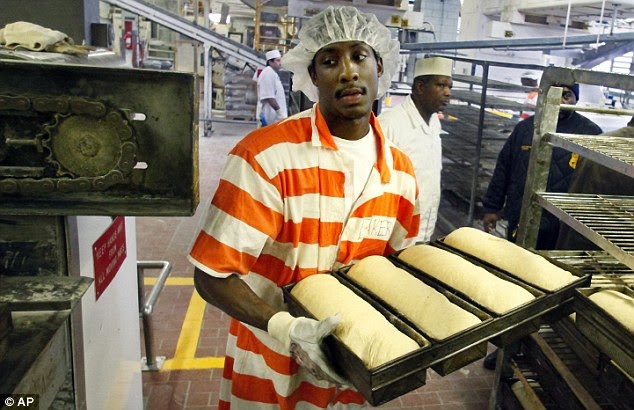
Bread-Bakers-at-work
Local Bread Bakers at work

1. Your Bread Could Get Burnt

Moment of carelessness by your workers could get you bread burnt easily which may result to high loss of money.

Install a smoke detector at all location of your bakery, because in our case all our night shift workers once fell asleep making about 5 flour bags of baked bread burn to ashes we were lucky the building didn’t burn down. So don’t over look little mistakes from workers otherwise it will come back to hunt you.

This is one of the major risks every baker must be aware of because of the potential danger it carries. But it’s a risk that could be avoided if you take proper precaution.

2. Spoilage

Because of the competition in the business and effort to attract more retailers, most bakers offers to accept back bread if it developed mold. Some retailers are so careless and ineffective in sells that they keep those bread unsold for long time only to return it when it develops mold.

When this happens, you are the final person to bear the cost and if it happens in large number, you may be out of business.

3. Price Fluctuations

Prices of baking raw materials is the most unpredictable as baking flour can change within days unannounced. When this happens, you buy flour at higher cost and still sell your bread the same price you used to sell because bread is a very sensitive commodity, you can’t increase the price arbitrary.

 4. Police Harassment

Because bread is a ready made fast food, Police may stop your supply vehicle on the road even when you did’t do a thing and demand that you give them some breads. Though you are not under obligation to give but if you don’t, they may try to victimize you in other ways.

By the time you do that to and fro, imagine how many loaves of bread you would have lost? Road safety, LASTMA, and other agencies are equally there.

5. Theft

Internal and external theft by your staffs, people who may come into the premises, touts on the roads, and others may reduce your profit in the business.

How To Setup Your Bread Bakery

Having mentioned some of the major risks involved in the bread bakery business that you need to be aware of, let’s process to discuss how to get your bread bakery setup and the materials you need.

1. Get Training

To become a professional baker, you need training in bakery and food processing. Some people get their training by getting attached to a bakery to learn all the skills of baking from first hands experience. If you are fortunate to have worked in Bread Bakery, that will make things lot more easier as you must have learned the skill while working.

Look for a professional trainee who will train you in the art of bread making. Your success in this business depends on how much you know; do not trade knowledge for anything.

2. Prepare Your Business Plan

As they say: He who fails to plan, plan to fail. You need to have business plan that will guide you along the way. You can prepare it yourself or hire a professional to do it for you.

Don’t just assume you have everything in your head, lack of proper clearly written out business plan can make a business crumble within a short time.

3. Source For Finance

Bread Bakery business is a capital intensive business especially if you are starting it big which is my recommendation. You have to start big or medium if you hope to be producing quality bread that will attract good patronage. And starting big requires some good amount of money.

Read: How to Raise Money for Business

Incentive you have the required capital to invest in this business, you are halfway done. Make sure you budget 7/12 months working expenses; time you will require to gain ground before the profit starts flowing in. At this point you’ve started following your business plan.

4. Choose Location

This is important but not critical. While location in the city and busy towns allows retailers to come in and buy without having to travel distance, you can make up to this with good marketing and supply mechanism. If your product is good, well branded, and marketed effectively, people will find you no matter where you are.

So, weigh the situation carefully and look for suitable location that you think will be good for your business. Property cost higher in the major cities but well worth your business.

Note: People sometimes buy products based on the address. I personally have rejected some products because of where the factory is located. It may not be obvious but believe me it happens.

5. Build Your Factory

Here you need to engage the services of expert too. Your factory have to be properly planned and executed in other to meet NAFDAC approval requirement.

Bakery Equipment You Need To Acquire

1. Baking Oven

You need to go for the industrial baking oven if you can afford it. That is what professional baker who makes bread in commercial quantity use. It cost much but well worth the price and will make your work lot more easier.
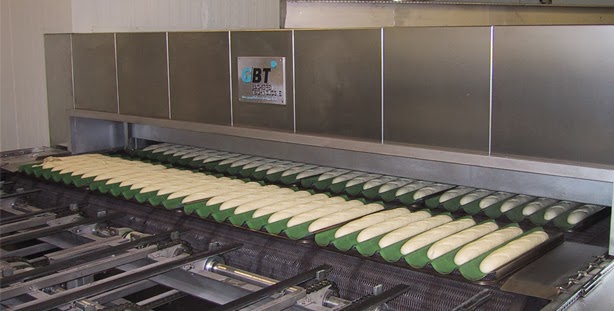
Standard-Bakery-Oven

Standard Bakery Oven

2. Flour Mixer

Mixer is the device that mix the flour and other ingredient into pastry ready for baking. There are local mixers and there are standard electronic mixers. Go for the one that is suitable according to the standard of bakery you are setting up.

3. Slicing Machine

This is important if you intends to slice your bread. Sliced bread is the most popular and most respect in Nigerian market. Therefore, slicing machine is compulsory if you are baking in Nigeria or any other country like that.

4. Baking Pans

Some heavy ovens do come with baking pans but that may not be suitable to the size you wants to make. You need to buy or design baking pans according to your specification, I mean specification according to what is obtainable in the market.

5. Bread Wrapper Supply

You a well branded bread wrapper in constant supply. Make arrangement for this in advance before production commences.

6. KVA Generator

You’d always need a standby generator, very big one for that matter. Your production is sensitive and you can’t afford to joke with it.

7. Supply Truck

Then a supply truck to help in your marketing. There no way you will be able to market effectively if you don’t have at least one supply vehicle.

Get NAFDAC Approval For Your Bread Bakery Business

It is very sad that no bread currently produced in Nigeria that passes international health standard according to experts report. Everything shouldn’t be money first; do the right thing and then money will come and even surpass your expectation. Why give your fellow citizens poison in the quest to make fast money?

There is the challenge of unhealthy and unethical competitors whose warfare is price reduction. These bakers substitute ingredients like sugar (which is the most expensive ingredient) with saccharine because it is far cheaper to do so, without considering the health hazards of saccharine.

Since the consumer cannot differentiate the different between a sugar sweetened bread from saccharine sweetened bread, such Shylock bakers take the advantage, because they know that most consumers will go for a low-cost bread first,” said Ebube Frank Umeh, director of Big Sam Bakery, who recently launched Mr Honey brand of bread.

By all means, try and meet the international standard in your bakery business. I can assure you that if you do everything right, no matter how much money it take you, you are going to make plenty of profit in return and your business will enjoy good will from man and God.

Before you produce anything, you must obtain NAFDAC approval first if you are in Nigeria. If you are in other country, seek for the appropriate authority to get your approval. When all things is put in place, you will be good to go!


Tuesday, 5 September 2023

Tips that can be used to improve baking business


Bakery Business Tips That You Should Employ

While managing a bakery business isn’t easy, it is more challenging to do all the things required that will ensure that your bakery business does wonders. Read below to know how you can further run your bakery business better.

1. Have a Clear Finance Sheet

Having proper bakers insurance in place is one way you can keep your ovens hot and cash registers overflowing. The bakeries which plan and prepare for emergencies are the ones that are always prepared and can move on to further expansion. Hence, budget your restaurant operations carefully. Maintain a detailed expense sheet about how much goes into maintenance, buying of raw materials and paying your staff every month. Once you have your total monthly expenditure, then you can calculate your profit margin and invest the extra profit made, back into your bakery business.  Your bakery is your dream. Don’t let a potential finance issue turn your dream of running a successful bakery into a nightmare.

 2. Diversity Attracts

Bring out innovative bakery items, and it will be a sure thing to attract customers. You can innovate not only with the items but also with the format of your store. For instance, mobile dessert food trucks have become popular in many cities. It is also seen that companies often contract with bakers to provide catering services. Catering for birthdays and anniversaries is a great way to come into the limelight as well.

To capture the crowd that hovers on social media platforms, you should also consider adding an online storefront and selling your baked goodies through the internet. 

Having big dreams is always good, but make sure that you dream of the things that you are capable of achieving. Hence, when diversifying, make sure to assess your capabilities, workflow management, and the costs associated with expanding your bakery business. A steady expansion is more sustainable than a rapid rise, and the former is expected to have a more significant impact on the healthy growth of your bakery business. You don’t want to create an unsustainable surge in business and then immediately deflate like a balloon. 

3. Having a Website is a Must

To have a legitimate online presence, it is imperative for your bakery business to have its website. An optimized and well-designed website as per the SEO norms will help people searching for bakery products find your bakery easily. Once, your bakery business becomes easily accessible to all your customers, it will automatically help you to boost your sales. Optimizing your website to make it SEO friendly is not an easy task, and hence it is recommended that you get some professional help for this.

4. Create a Social Media Following

Social media is the best way to attract and capture the immense crowd who are hovering on these various platforms. Hence, make sure that you have created business pages on social media and update and optimize them on a regular basis. Post regular photos and videos that will reflect the happenings of your restaurant. You can even receive reviews and feedbacks from these pages that will help you to hone the operations of your bakery business further.

5. Integrate with Online Delivery Platforms

Considering that most of your customers would now like to order food than to go out and dine. Hence, it becomes imperative for your bakery business to allow your customers to order online from your store. So, what you can do is, integrate with Zomato, Swiggy, Foodpanda and UberEat like platforms which will help your products to reach the doorsteps of your customers. Not only should your restaurant be visible on these online delivery platforms, make sure that people can order directly at your restaurant through your restaurant website as well. This will reduce any scope for you on losing your potential clients.

6. Use Technology to Manage Your Bakery Operations

The operations of a bakery business are entirely different from that of a regular restaurant. The production of the baked items and managing the semi-produced and the final baked items can become tedious unless you use a proper Bakery Management System.

Another major challenge of running a bakery business is ensuring a consistent service of fresh baked goods. Of course, there would be times when you would not be able to able to sell off all the items produced in a day, yet which are good enough to be still sold the next day. Keeping track of the items which are fresh and which are stale or expired becomes a task. You can make use of technology to solve this problem. Use an integrated Inventory Management System that allows you to manage the Shelf Life of each item. You can assign the expiration date for each item in the POS that will enable you to sell only the products that are still good to be sold.

Restaurant POS Checklist 7. Network with all the Local Business

Your bakery business must enter into collaborations with all the local businesses in the vicinity. This will help you to increase your sales further. For example, we have seen, that during birthdays people tend to deliver their loved ones cake and flowers as a surprise if they are not in the same city. So, why don’t you collaborate with a local florist and help people order flowers and cakes and get it delivered as a package at the desired place? This will make your bakery business a one-stop point of contact for all those who want to surprise their loved one with some extra indulgence.

8. Try to Stand Out in the Vicinity

Try and bring specific innovation in your bakery business which is not present in your vicinity. This will keep you ahead of your competitors. Consider offering gluten-free options or becoming the only nut-free bakery in your area. If your bakery business is the only one providing a doughnut and coffee combo, then it is a sure thing that you would attract customers. Hence, do market research, try and analyze what are the trends that are yet not exploited to the fullest and then bring about changes accordingly.

9. Offer Free Samples to the Passersby

Hand out samples of your dishes to the walk-in customers and passerby on the street. The customers may be willing to purchase whatever you are sampling if the treats are delicious if they look good and they are available immediately for purchase. Hence, never forget to put a plate of cookies or a few slices of pastries on the counter for the customers.

We hope that after reading this, you have gained a comprehensive knowledge of how to manage your bakery business successfully. Follow these bakery business mentioned earlier tips that will bolster your sales and help you to have an overflowing cash register in your bakery business

How to maintain Health and safety in a bakery


How to improve and maintain health and safety in a bakery

It is important to remember that health and safety in a bakery should never be taken lightly. By following the proper protocols, such as

  • wearing protective gear
  • providing adequate training to staff
  • keeping work surfaces clean and sanitized, and ensuring proper storage of food products.
  • it is possible to keep a bakery safe for customers and employees alike. Regular inspections by management or health inspectors can help ensure that all required standards are met.

Golden rule in baking


What is the golden rule in baking?

The golden rule in baking is a simple yet important principle that every baker should have at the back of their mind when creating delicious baked goods.

It could be the difference between an average cake and one that looks and tastes like it was made by a professional. The concept is quite straightforward, but it is easily forgotten or overlooked in the heat of baking.

At its core, the golden rule of baking states that ingredients should always be combined and cooked for only as long as necessary to achieve good results.

This means mixing ingredients until they are just blended together without overmixing, turning off ovens when cookies are lightly browned or cakes are springy to the touch, and avoiding microwaving cakes for too long to ensure a moist texture.

Following this simple advice will help novice bakers create better-tasting treats with fewer mistakes.

Hygiene Checklist


Bakery hygiene checklist

Bakery hygiene checklist is an essential tool for every bakery, big and small. It helps ensure the safety of customers, employees and products in the food industry.

The checklist provides a comprehensive list of all the necessary steps that need to be taken to maintain proper hygiene in bakeries.

There are many elements involved in bakery hygiene such as proper storage of ingredients, suitable cleaning and sanitation procedures, adequate pest control measures and so on.

Furthermore, it is important to make sure that all equipment used in baking is regularly cleaned and inspected for cleanliness.

Proper hand washing techniques should also be practiced by employees when handling ingredients or finished products.

Additionally, it is important to keep track of expiration dates on any food items stored at the bakery so they can be replaced before they spoil or become unsafe to consume.

Baker's Duties


Duties Of A Baker

A baker has many responsibilities in the kitchen. They must be able to follow recipes, measure ingredients, and mix them together correctly. Bakers also need to know how to use different types of baking equipment and how to bake various types of doughs and batters.

In addition to these technical skills, bakers must also have good organizational skills and be able to work quickly and efficiently. They often work early mornings or late nights, so they must be able to handle early mornings or late nights.

Training For Bakery Employee


Bakery employee training manual.

1. Your team will instantly know all your expectations

  • The first important benefit is that your team will instantly know what is expected of them.
  • You may not have had a chance to communicate everything to your team. An Employee Handbook is the place to include all the details.
  • Whenever someone new joins your team, you’ll have a tool to guide them. Many bakeries do not operate efficiently because their staff has not been informed of the details, including the rules and the usual level of service delivery.
  • General guidelines may have been provided to you, however, you need to be specific.

2. Set the direction for customer service.

  • Getting 5-star ratings for each customer should be your goal. Otherwise, your business will struggle to compete and ultimately struggle to survive. Establish the minimum expected standards for your equipment with an Employee Handbook.
  • As you already know, product quality, taste, and customer service are the keys to running your bakery. Your business revolves around the taste of your products and customer service, including online reviews.
  1. Your team will build genuine trust with your customers.
    Being authentic and building trust is key to securing loyal customers, which in turn strengthens your business in all areas.

Small businesses of any kind depend on repeat customers. You cannot survive without them. Build trust and keep those customers coming back.

3. Avoid repeating yourself

  • A good friend once told me that if you don’t want to repeat yourself, don’t have kids or run a business.
  • How true is that? Implementing an employee handbook means it won’t have to be repeated indefinitely. Your team will have a document that they can refer to first.
  • Be sure to always refer to the Employee Handbook when asking questions. It must be constantly revised and updated.
  • Take it seriously and your team will take it seriously.

4. Determine quality above all

  • You can’t run a successful bakery if you’re creating and delivering an inferior product. It’s very competitive and most customers have high expectations.
  • You need to focus on quality and aim to deliver it in everything you do every day. Make sure your team focuses on quality through the Employee Handbook.

Regulations For Bakery


Government regulations for a bakery.

1. Taxes

You must collect sales tax if your state requires sales tax on baked goods. This money is then turned over to your state department of revenue.

The collection of sales tax depends on your state’s specific requirements for restaurants and bakeries.

Generally, you must file tax forms in your state to obtain a tax identification number in order to pay the required sales tax to the department of revenue.

You must establish a legal structure for your bakery and establish a CPF / CNPJ for the company.

You can choose to establish a fictitious name in your county by filing a DBA with the county clerk, or you can establish a corporation and request an employer identification number from the IRS. Either of these two options will allow you to conduct business wherever you live.

3. Licenses and Permits

The need for some specific types of license will depend on whether you are a full-service bakery, make your own bakery products, or simply resell bakery products that you buy in bulk.

For example, Oregon requires a specific license for bakeries, while it requires another type of license for retail stores that simply sell baked goods but no longer process those products.

4. Inspections

Your bakery may be subject to regular inspections by healthcare workers. You must have excellent sanitation practices and maintain a bakery that provides food that is safe to eat.

Hazard and Critical Control Point Analysis is a management system that you can implement to analyze the safety of food that you sell to the public. It allows you to monitor processed raw materials for the finished products.

Know about the importance of good ingredients


Important of good ingredients

  • It is very important to buy quality and good baking ingredients, and check the expiring date of some ingredients before buying them. For instance, Pure vanilla is a very expensive spice, but it is worth the money when it comes to making a high-quality baking
  • Eggs add texture to your mixture. Therefore, it must be fresh.
  • flour should be dry and free from smell. Fats should not be too hard or oily.
  • It is also crucial to recognize the freshness and quality of the products you will use. Having a good grasp of these main ingredients will guarantee a high-quality snack for your enjoyment.

Bakery Rules and Regulations

 Simple Bakery Rules amd Regulations

1. Bring together all equipment needed.

When it comes to baking, having all the right equipment on hand is crucial to success. Here’s a quick guide to assembling everything you’ll need to make your next baking project a breeze.

First, make sure you have all the basic tools: an oven, mixer, measuring cups and spoons, baking pans, and cooling racks. Then, stock up on essential ingredients like flour, sugar, butter, eggs, and baking powder or soda.

Once you have everything you need, it’s time to get started! Preheat the oven according to the recipe instructions and gather all your ingredients in one place. This will help you stay organized and avoid any last-minute scrambling. With everything in its place, you’re ready to start baking up a storm.

2. Grease the cake pan with saltless fat.

When it comes to baking, one of the most important steps is greasing the cake pan. This ensures that the cake will not stick to the pan and will release easily. There are a variety of ways to grease a cake pan, but using saltless fat is one of the best options.

Saltless fat is a type of fat that does not contain any salt. This makes it ideal for baking because it will not alter the taste of the cake. It is also less likely to cause issues with baking powder or soda.

When using saltless fat to grease a cake pan, simply apply it to the bottom and sides of the pan with a paper towel. Using saltless fat is an easy way to ensure that your cakes will turn out perfectly every time.

  • Greasing your pan helps the baked stuff to be released easily immediately after baking.
  • Greasing cake pan helps it not to scatter while bringing it out.
  • If you grease your pan before baking, it helps to wash it out easily after use.

3. Prepare all ingredients well before mixing.

Yes! If you want to have a unique cake, you have to get all the necessary ready. We’re talking about preparing all ingredients before mixing because this is key to ensuring your cake is delicious and one of a kind.

If you take the time to measure out each ingredient and mix them together carefully, your cake will turn out beautifully. And if you really want to impress, don’t be afraid to experiment with different flavor combinations.

The most important thing is to have fun and enjoy the process. After all, what’s better than eating a delicious cake that you made yourself?

The important

  1. Baking is a science, so measuring your ingredients correctly is key to success.
  2. Prepping all of your ingredients before you start mixing helps to ensure that everything is properly combined.
  3. It also allows you to focus on the actual baking process, rather than fumbling with measuring cups and spoons.
  4. Having all of your ingredients ready to go also cuts down on cleanup time later.
  5. Preparing everything in advance also means that you can bake even when you’re short on time.

4. Sift the flour.

Flour is the main ingredient in any baking, so it is very important to sift the flour in order to avoid unnecessary occurrences. Sifting the flour helps to aerate it and also to get rid of any lumps that may be present. It is also important to sift the flour before measuring it, so that you get an accurate measurement.

When sifting flour, be sure to do it over a bowl or a piece of parchment paper so that you don’t make a mess. Sifting your flour before combining is very important for a promising baker.

7 reasons why you should sift flour before use

  1. Sifting the flour helps to aerate it, making it lighter and easier to work with.
  2. Sifting also removes any lumps or clumps that may be present in the flour, giving you a smoother end product.
  3. Sifting allows you to better measure the flour when baking, ensuring your recipes turn out perfectly every time.
  4. Sifting also helps to incorporate other ingredients more evenly, resulting in a more consistent finished product.
  5. Overall, sifting the flour is simply good practice that will result in better baked goods – so don’t skip this step!
  6. If you forget to sift, you will have more flour than the recipe planned.
  7. Neglecting to sift flour, trust me, you likely won’t mix them appropriately and you will see lumps or particles. Especially when the flour has stayed for a very long time.

5. Use accurate measurements

Baking is a science and, like all sciences, accurate measurement is vital. This is because all the ingredients react to each other. Any mistake can affect the taste.

For example, if you are baking a cake and you use too much flour, the cake will be dense and heavy. On the other hand, if you use too little flour, the cake will be light and airy but it may not be cooked through.

Similarly, if you use too much sugar, the cake will be very sweet; too little sugar and it will be less sweet. The same is true for salt: too much salt and the cake will be inedible; too little salt and it will lack flavor. Therefore, weigh your ingredients carefully and accurately before adding them.

Whether you’re following a recipe to the letter or just eyeballing it, precise measurements are key to successful baking. Here are five reasons why accuracy matters in the kitchen.

  1. The wrong amount of ingredients can ruin a recipe.
  2. Baking is a science, so precise measurements ensure consistent results.
  3. Small variations in measurement can make a big difference in the outcome of your baked goods.
  4. Measuring properly allows you to replicate your favorite recipes with ease.
  5. If you want to bake like a pro, you need to measure like one too.

6. Use Good Ingredients

Cake baking is an art that takes time, effort and good ingredients to perfect. There are a few key things to remember when baking a cake: use fresh ingredients, measure correctly and follow the recipe to the letter.

Fresh ingredients are essential in any baking recipe, but especially in cakes. Cakes are delicate and rely on eggs, butter and milk for their structure and flavor. Be sure to use room temperature eggs so they blend evenly into the batter. Room temperature butter will also blend more easily and create a more consistent cake.

Using fresh, high quality ingredients will ensure your cake tastes its best. Be sure to measure correctly – too much or too little of an ingredient can ruin a cake. When in doubt, follow the recipe to the letter. With these tips in mind, you’ll be able to bake delicious cakes that your friends and family will love.

Bakery Safety Tips


HOW TO IMPROVE AND MAINTAIN HEALTH AND SAFETY IN A BAKERY

Midsection-20od-20male-20and-20female-20chefs-20preparing-20dough-20for-20bread-20at-20kitchen-20counter-20in-20bakery


 Bakers have it tough! You work long hours under hot conditions around hazardous products in a busy environment. Have you ever been burned by hot sugar? Felt a twinge in your back when lifting heavy sacks of flour? Or slipped on a wet floor when a coworker spilled the water near an industrial mixer? Due to the risk of potential hazards, it’s important to keep health and safety in mind for your bakery.


Whether you’re an apprentice baker or the head baker, health and safety in a bakery is key to keeping everyone safe and happy in the workplace. How do you maintain health and safety, and where and how can you improve?


The Health and Safety Executive agrees that most bakery accidents happen as a result of heavy lifting, slipping, exposure to harmful substances, machinery, hot equipment, and even flour dust.


When you work in a bakery, you can often work over twelve hour shifts. The kitchen can be hot - if you have several large ovens going at once and the dough proofer - and you have to lift heavy 16kg (35 lbs) sacks of flour, buckets of water, slabs of butter, and after all that the dough itself. The noise from large mixers can be deafening, and the bustle of busy staff can post added danger.


How To Prevent Accident and Injury in a Bakery?

Clean. First of all, no matter how busy you are, make sure your workplace is clean. Water, flour and sugar can create a slippy paste, so make sure surfaces are regularly wiped down. Keep equipment out the way when not being used  so there’s no danger of other bakers tripping over a rogue baking tray.


Anti-Slip. Second, with those slippery surfaces, you may want to consider putting down anti-slip mats as well as making sure that floors are mopped regularly and free of standing water.


Double Duty. Furthermore, the food itself can cause dangers. Hot sugar and multiple ovens pose risk of burns. Make sure to protect your hands with heavy-duty tea towels (as oven gloves are impractical when you’re moving from task to task). For lifting heavy objects, try and encourage teamwork to cause fewer musculoskeletal injuries as baker injuries can mean lost time and money for both the baker and the bakery.


Beat the Heat. For hot environments, consider a cooling system to keep your bakers cool and comfortable. Make sure the clothes, aprons, and hats worn are made of breathable and hygienic fabrics.


Noise Reduction. To combat noise, you may want to provide earplugs as an optional feature in the kitchen. You can find some ear plugs that allow a healthy amount of sound through - so you can hear your coworkers - but that protect your ears from harmful decibels.


Workplace Flow. Finally, an important safety feature to consider is the placement of mixing equipment and ovens, and how your bakers move around them. Make sure your kitchen has an efficient layout. Speak with the head baker about how everyone moves and works in the kitchen. Having a proper layout of both kitchen equipment and staff makes everything more efficient and safe. 


Think of hazards that pose risk of injury to your staff, and get together as a team to figure out what equipment you need to prevent injury.


Public Facing Bakery versus Commercial Bakery: How they Differ on Safety

Whether your bakery is small, and public-facing - i.e. you have your bakers in the back, and some serving staff in front of glass display cabinets - or you work in a large, commercial bakery without customers, safety considerations don’t differ much. Large or small, you still need to consider the risks and how to combat them.


Layout. With smaller bakeries, there may be fewer people to navigate around, so they will automatically be safer than a large-scale bakery in which there are many moving parts. Both types of bakeries need to have efficient layouts - in the kitchen itself and in all areas of the bakery.


Training. Where they differ most will be in training and adhering to regulations. The larger the workforce, the more training you’ll need to do for your staff. Also, a well-oiled machine should work smoothly and may need very little communication - for example you might have some bakeries in which the bakers know what to do and when to do it and everything runs smoothly without the head baker having to shout directions to her apprentices and other staff - but in order to get to that level of efficiency, everyone must be properly trained. Training also stops each person being a danger to others. The workplace has enough hazards without an untrained staff member knocking into another causing a chain reaction of negative consequences.


One area that won’t differ is hygiene in the food workplaceit's important to maintain extremely high hygiene standards. When you're working with food, work surfaces and all kitchen utensils need to be clean and steps must be put in place to avoid cross contamination. Also as you’re dealing with food and utensils and potentially customers, it’s really important that all staff keep washing and sterilising their hands regularly to avoid possible cross contamination.


All Bakers Should Wear Slip-Resistant Shoes At Work:

Slip resistant shoes can improve and maintain health and safety in the bakery; all bakers should wear the correct footwear at all times, and it’s especially important that your footwear prevents slips and provides comfort. Wearing durable footwear means the shoes last longer, and are less costly over time. Furthermore, we have slip-resistant styles that are designed for the catering industry in mind and provide comfort and support to feet and joints.

How to Start a Profitable bakery business in Nigeria

  How To Start A Bread Bakery Business In Nigeria Bread is the third most popular food staple in most parts of the world. It is widely consu...